
Enhance your piloting, comfort and safety
Rediscover a smoother, more intuitive flying experience
Free yourself from the constant monitoring of your instruments
Receive clear, continuous information effortlessly

See, understand and anticipate the flight without taking your eyes off the sky
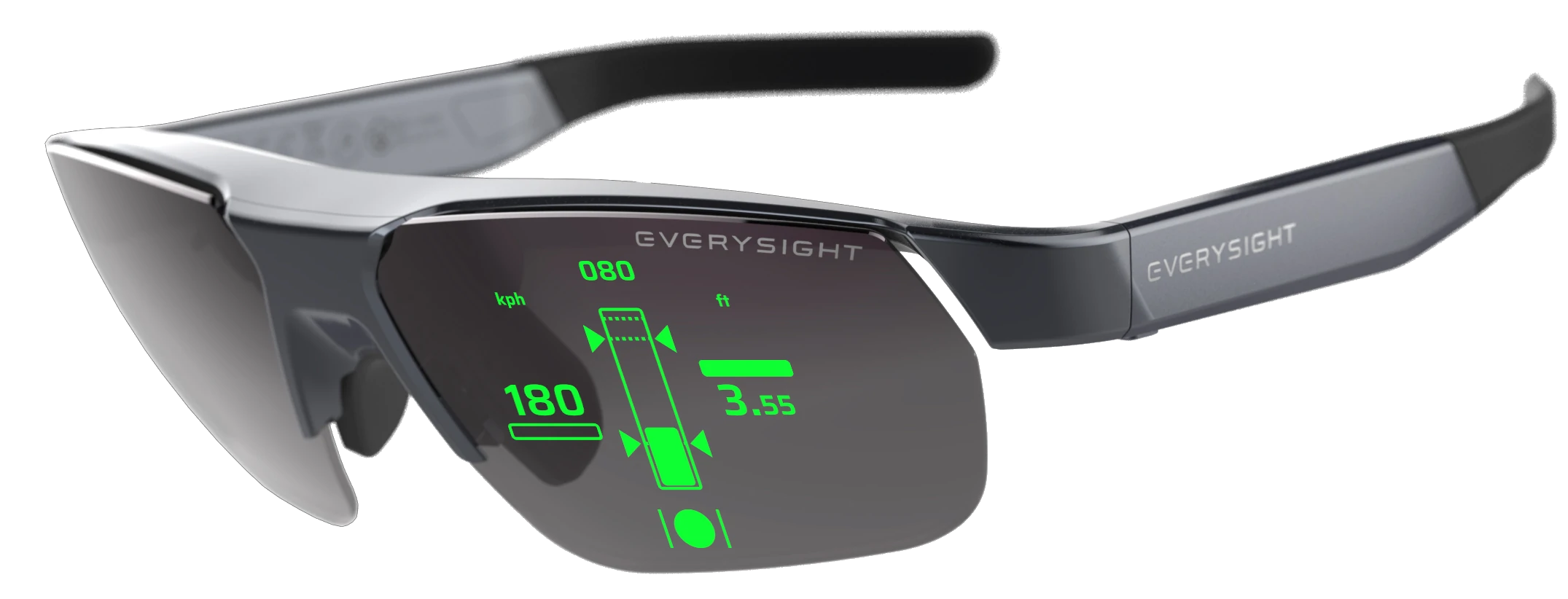
What is this about?
In VFR flight, everything starts with looking outside—to perceive the environment, the aircraft’s attitude, and its trajectory.
But since we are not birds, we also need information: our flight parameters, navigation data, traffic, and more.
However, as cockpits become more complex, the pilot’s attention increasingly shifts inward.


Paul Prudent, Mountain Flight Instructor:
“As a microlight mountain flight instructor, I have noticed the increasing sophistication of microlight instrumentation, which consequently shifts the pilot’s attention toward it. In mountain flying in particular, where we operate close to terrain, without radar monitoring, and with the presence of gliders and birds of prey, external vigilance is essential. Maintaining the pilot’s cognitive availability remains, in my view, a major safety concern.”
Paul Prudent, Mountain Flight Instructor:
“As a microlight mountain flight instructor, I have noticed the increasing sophistication of microlight instrumentation, which consequently shifts the pilot’s attention toward it. In mountain flying in particular, where we operate close to terrain, without radar monitoring, and with the presence of gliders and birds of prey, external vigilance is essential. Maintaining the pilot’s cognitive availability remains, in my view, a major safety concern.”
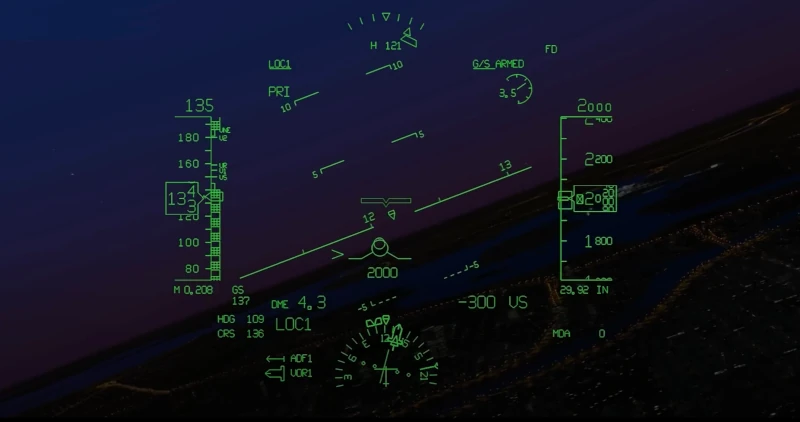
The solution
Today, the challenge is not to have more information, but to acquire it, integrate it, and understand it quickly—without mental overload—while staying true to the fundamentals of VFR flight.
Professional aviation has long solved this problem: the head-up display (HUD).
We have therefore adapted this solution, originally reserved for professionals, to the constraints and specificities of light and ultralight aviation.

Guy Mitaux Maurouard, former Dassault Aviation test pilot:
“Pilot assistance using HUDs has been employed for decades on all fighter and trainer aircraft, military transport planes, and business jets operating from airfields without landing aids. It represents a significant improvement in safety and in overcoming the challenges of basic flight training. Bringing this technology to so-called light aviation—certified aircraft or microlights—is highly desirable, and connected glasses now make this possible.”
Guy Mitaux Maurouard, former Dassault Aviation test pilot:
“Pilot assistance using HUDs has been employed for decades on all fighter and trainer aircraft, military transport planes, and business jets operating from airfields without landing aids. It represents a significant improvement in safety and in overcoming the challenges of basic flight training. Bringing this technology to so-called light aviation—certified aircraft or microlights—is highly desirable, and connected glasses now make this possible.”
UL VISION: the advanced perception system for VFR flight
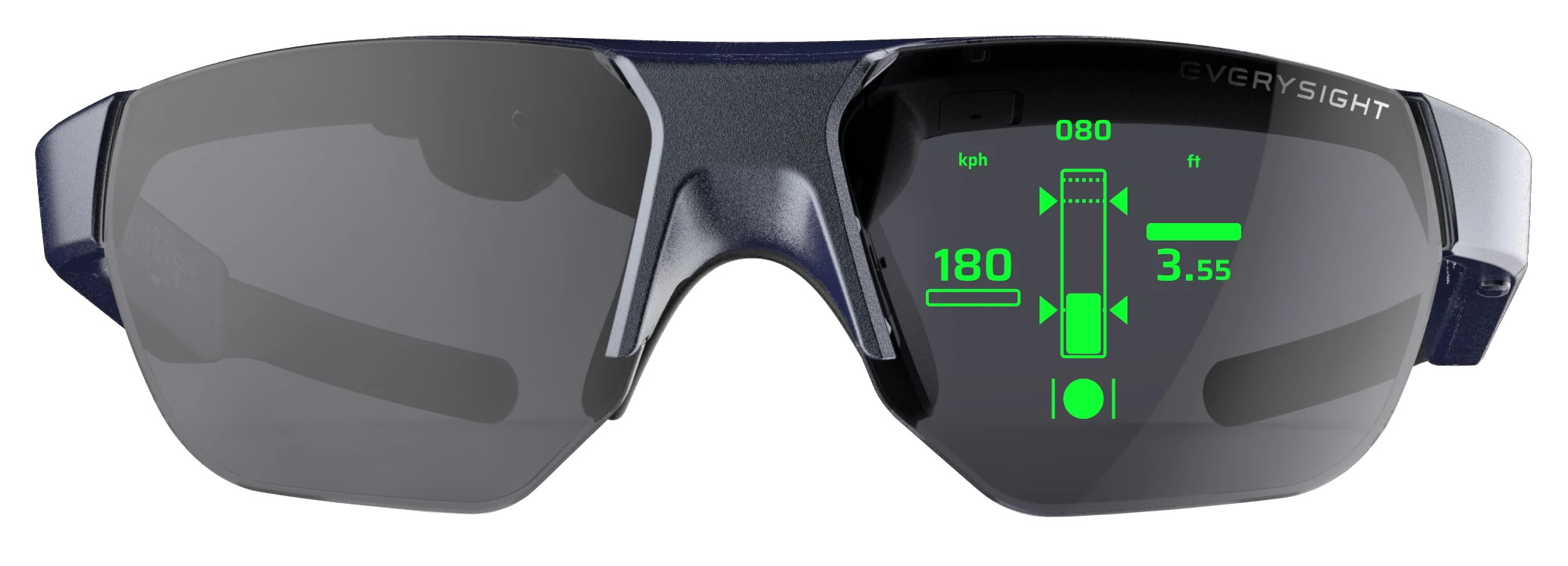
UL VISION is an advanced perception system for VFR piloting, designed to enhance safety and situational awareness in light and ultralight aviation while keeping the pilot’s eyes outside.
See accurately, at the right moment, without taking your eyes off the sky.
UL VISION was developed to provide pilots with safety and flight information derived from professional aviation—attitude, trajectory, traffic, and more—useful for perceiving and understanding the environment and the aircraft’s situation, presented intuitively, progressively, and directly in the line of sight.
UL VISION is not just another instrument; it’s a new way of perceiving information, staying true to the fundamentals of VFR.
You no longer read your instruments—you perceive them.

PILOTING

COMFORT

SAFETY
What UL VISION offers
Restore pilot availability……
Piloting comfort
- The lack of constant monitoring,
- the clear, effortless-to-read interface,
- your eyes free
provide better piloting comfort by reducing your mental workload. You enjoy your flight more and are more available for other tasks.
You no longer read your instruments—you perceive them.
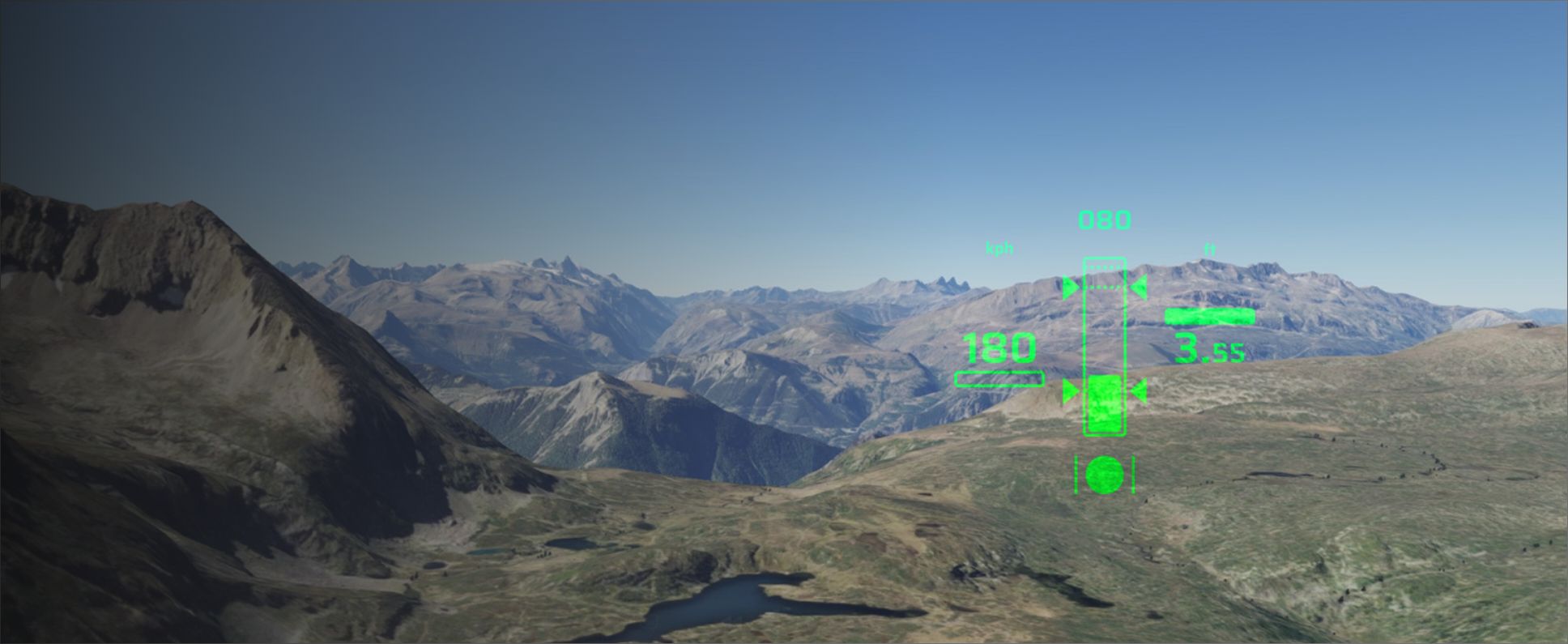
Piloting comfort
- The lack of constant monitoring,
- the clear, effortless-to-read interface,
- your eyes free
provide better piloting comfort by reducing your mental workload. You enjoy your flight more and are more available for other tasks.
You no longer read your instruments—you perceive them.
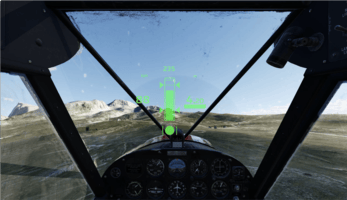
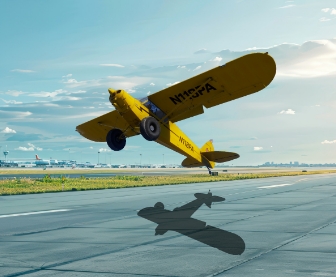
Piloting mastery
- With your perception maintained outside
- and your flight parameters constantly visible,
you can:
Better maintain your flight parameters (speed, altitude, course…),
Fly smoother trajectories by avoiding abrupt corrections,
Achieve better coverage of the flight environment, particularly thanks to the highly precise and progressive display of angle of attack.

Increased safety
- Respect for the fundamentals of VFR flight
- Better awareness of your environment
- A unique and precise angle-of-attack display
- Reduced mental workload during critical phases
- No micro-distractions
- Automatic alert notifications
- Redundancy of your instrumentation
All of these features contribute to increased flight safety.
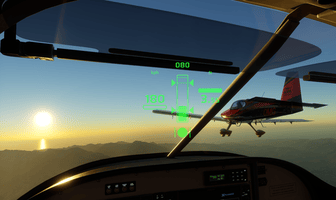
Increased safety
- Respect for the fundamentals of VFR flight
- Better awareness of your environment
- A unique and precise angle-of-attack display
- Reduced mental workload during critical phases
- No micro-distractions
- Automatic alert notifications
- Redundancy of your instrumentation
All of these features contribute to increased flight safety.
Ultimately, a better flying experience and increased enjoyment.

UL VISION – Who is it for ?
UL VISION is designed for demanding pilots who want to:
Improve their piloting,
Increase their flight safety,
Make better use of their aircraft’s capabilities,
Gain greater piloting comfort.
Features designed with you in mind
An ergonomic and autonomous system:
- Easy installation: UL VISION can be installed in just a few minutes, with no modifications to the aircraft.
- Complete autonomy: Operates on battery, with no wiring or connections required.
- Discreet: Lightweight and compact, it integrates perfectly with your flight gear.
- Mobility: The probe can be manually installed and removed for protection and charging.

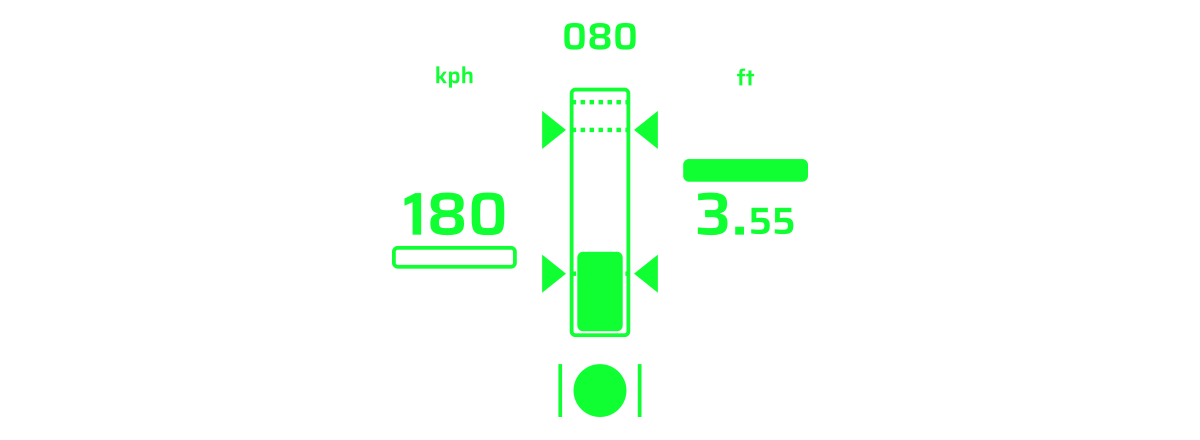
Efficiency
All your essential flight parameters combined in a single, clear, and concise display.
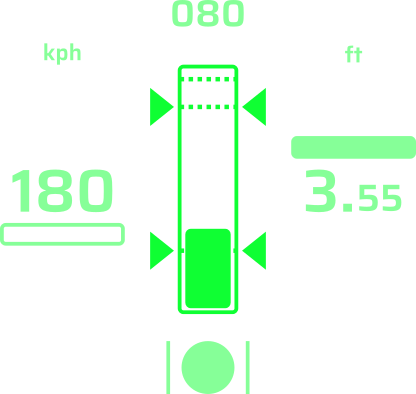
Angle of attack:
Highly precise and progressive angle-of-attack measurement, from low angles to stall.
Markers for approach and maximum glide efficiency, enabling angle-of-attack-based flying.
A color-coded alert system to warn you as you approach the limits.
This is an essential safety parameter, often missing from standard instrumentation.
FAA – Airplane Flying Handbook (FAA-H-8083-3C) Chapter 5: Maintaining Aircraft Control: Upset Prevention and Recovery Training
“It is important for the pilot to understand that a stall is the result of exceeding the critical AOA, not of insufficient airspeed.”
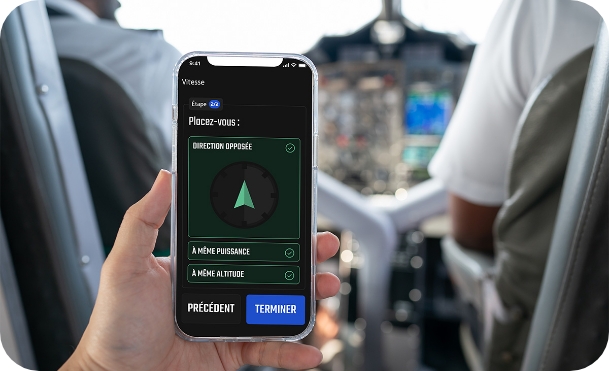
Advanced features:
- Ergonomics: All essential parameters combined in a single system.
- Precision: Simple calibration for highly accurate measurements.
- Continuous monitoring of internal sensors for complete confidence in the system.
Advanced features:
- Ergonomics: All essential parameters combined in a single system.
- Precision: Simple calibration for highly accurate measurements.
- Continuous monitoring of internal sensors for complete confidence in the system.
An upgradeable system designed to last:
Traduction en anglais :
- Simplified updates: With a Bluetooth connection to its mobile app (iOS and Android), enjoy regular upgrades and full customization.
- Future upgrades will include specific features (glider, navigation…) and advanced head-up display functionalities (velocity vector, horizon…).
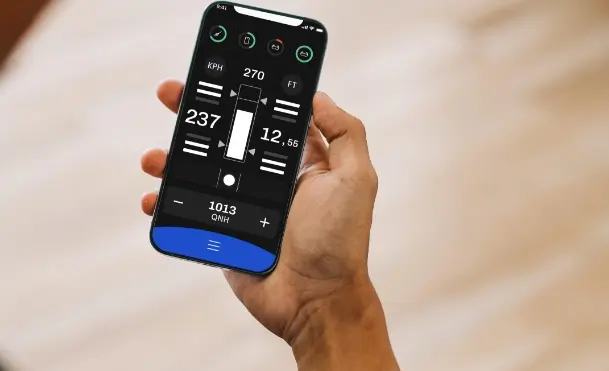
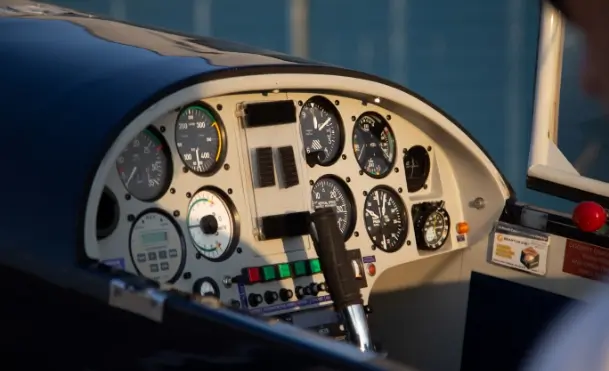
Enhanced safety through redundancy:
- UL VISION acts as a redundant and complementary system to your primary instrumentation, providing an additional layer of safety.
Enhanced safety through redundancy:
- UL VISION acts as a redundant and complementary system to your primary instrumentation, providing an additional layer of safety.
A complete solution tailored to your needs
The UL VISION system consists of three complementary components:

DART
The multi-sensor probe: autonomous and reliable, it measures and calculates essential flight data.

The augmented reality glasses :
They display flight information without diverting your eyes from the outside environment.

The mobile app:
Easily configure, calibrate, and update your system via your smartphone.

Why choose the UL VISION head-up display?
- Cutting-edge technology at your service: The precision of its sensors and its unique ergonomics make UL VISION an indispensable tool for modern pilots.
- Designed by experts, for pilots: Developed with the expertise of UL CONTROL, test pilots, and an aeronautical research center.
- Accessible innovation: Advanced performance without compromising ease of use.
- Upgradeable for more advanced displays to come: artificial horizon, flight path vector…
Could the probe reduce my aircraft’s performance?
The probe’s shape has been designed to be as aerodynamic as possible, with a frontal surface of only 8 cm². Its installation on the leading edge does not add any additional frontal area to the aircraft. Its weight is just 250 g. For comparison, a Pitot probe from a well-known American manufacturer weighs 320 g and has a protruding frontal area of at least 20 cm². UL VISION does not aim to optimize the last tenth of a knot—it aims to optimize pilot availability.
Isn’t the probe at risk of being damaged on the ground?
The DART probe can be manually removed without any tools by simply pulling along its axis. It can then be safely stored and recharged very easily. A small aerodynamic cap can be installed in place of the probe when it is not in use, preserving both the aircraft’s aerodynamics and aesthetics.
Should I connect the UL VISION system to my avionics?
The UL VISION system is very easy to install, requiring no connections of any kind and no modifications to the aircraft. It is completely self-contained, thanks to its rechargeable batteries and Bluetooth communication.
Will the system evolve over time?
The UL VISION system was designed from the outset to be upgradeable. The mobile app is available for free on the Apple Store and Google Play, and future updates will be accessible through these same platforms. Additionally, the probe can be fully updated very easily via the mobile app using a Bluetooth connection. The app checks for available updates each time it is connected, and the user can accept the update, which can only be performed on the ground, at any time. This allows the system to evolve in a simple and sustainable way.
Is it useful if I already have modern and fully-equipped avionics?
UL VISION does not replace your existing avionics, which remain your primary source of information. UL VISION offers a new way to perceive this information while preserving your cognitive availability and allowing you to maintain external situational awareness. Your avionics are still useful for providing more detailed information, for example. UL VISION complements your instrumentation.
What happens in the event of a failure or loss of connection?
Coming from the aviation world, safety is our top priority. In the event of a failure or loss of information, you simply refer back to the aircraft’s primary instruments. Of course, this alone is not sufficient, which is why the system incorporates several features to prevent the display of incorrect information. UL VISION continuously monitors the status of its sensors and the consistency of the measured parameters. If a data point is invalid or not calibrated, for example, the information is replaced by a red symbol or shown in amber. In the event of a loss of connection with the probe, the display immediately switches to a reticle. Finally, as a last resort, the display includes a blinking point in normal mode. If the system freezes, the cessation of blinking informs the pilot that the display is no longer being updated.
Is this system approved / legally acceptable for use on my aircraft?
UL VISION is an uncertified auxiliary instrument. It can be installed without restriction on an ultralight aircraft (ULM), provided it is mounted in accordance with its installation manual. Additionally, UL VISION complies with paragraph CS-SC251c of the EASA CS-STAN regulation. Therefore, it can be installed on a certified aircraft or glider within the operational limits of the UL VISION system.
Is there a risk of losing the probe in flight?
The probe assembly uses a 3M structural adhesive designed for exterior applications and subject to mechanical loads. The bonding design was developed with the assistance of 3M engineers. Additionally, the forces experienced by the probe in flight tend to keep it securely in place. Finally, its durability has been validated through many hours of flight testing.
What is the system’s battery life?
The system has an operational autonomy of 8 hours, and up to 12 hours for the probe alone.
Can I use UL VISION if I need corrective lenses?
Corrective lenses are available only for Type E glasses. These glasses are adjusted for a distance of approximately 2 meters. The correction range is limited to -4 / +4.
These corrective lenses can be obtained via the following link: https://www.bmwrx.everysight.com
For what purpose is UL VISION useful?
UL VISION is a valuable aid for all phases of flight or situations that require the pilot’s attention and availability. This includes, for example, landing, mountain flying, formation flying, engine-out scenarios, STOL operations, glider spiraling, and more. UL VISION also provides comfort in all situations by freeing the pilot from the continuous monitoring of flight instruments.
Do I need to change my flying habits?
No, UL VISION does not change your flying habits. It makes flying smoother, more comfortable, and safer. The only potentially new information is the angle-of-attack indication, which is rarely present on dashboards, but the system’s ergonomics make it very easy to understand.
Take off with the UL VISION head-up display
Give a new dimension to your flying experience. The UL VISION head-up display is more than innovation—it’s peace of mind and performance at every moment of your flight.

To learn more or order your UL VISION system
Technical specifications:
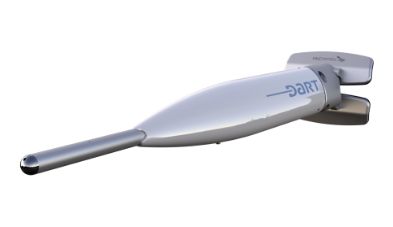
Probe
Probe dimensions : 240 x 33 x 33 mm
Total length: 278 mm
Probe mass: 250 g
Autonomy : 8h
Charging : 5h
Connectivity: 1 port USB-C (charge)
Bluetooth Low Energy
Operating temperature: -20°C / +60°C (-4°F/140°F)
Altitude range : 0 – 10 000 m (0 – 33 000 ft)
Speed range : 0 – 350 km/h (0 – 190 Kts)
Acceleration range : +/- 16G
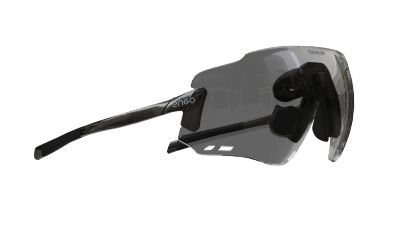
Type A glasses
Mass : 36 g
Lense : Photochromic polycarbonate
Category : 0-3
Projector : yellow OLED 306×254
FOV :
Autonomy : until 12h
Charging : 3h
Connectivity: magnetic USB (charging)
Bluetooth Smart 4.2

Type E glasses
Mass : 47 g
Lense : Clear of tinted polycarbonate, interchangeable
Category : 0, 1 ou 3
Projector : color OLED 640×400
FOV : >20°
Autonomy : 8h
Charging :
Connectivuty: Magnetic USB (charging)
Bluetooth 5.2